
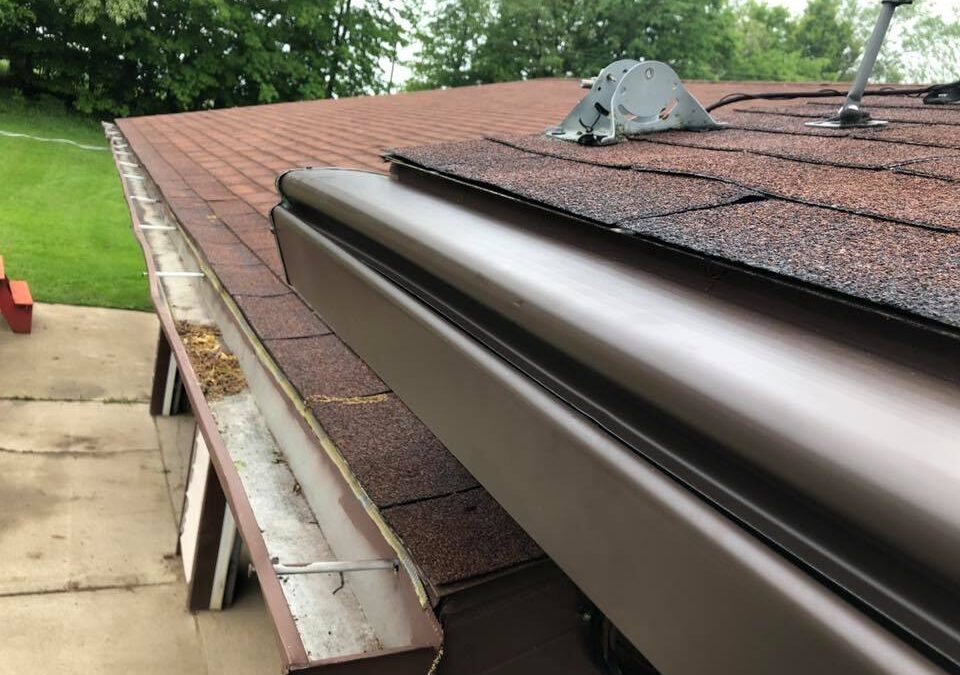
Where Is Your Gutter Water Going? 7 Drainage Problems to Fix Before Michigan Freezes
Before winter arrives, take a closer look at what happens to the water coming off your roof. Overflowing gutters, slow downspouts, standing water, and poor drainage can reveal problems that another gutter cleaning may not solve.

By November, most West Michigan homeowners have spent plenty of time looking at leaves.
But there is something more important to watch before winter arrives: where is the water from your roof actually going?
Your gutters are not just there to catch leaves or make the edge of your roof look finished. They are part of your home's water-management system. During a rainstorm, they collect a tremendous amount of water from the roof and are responsible for moving it through the downspouts and away from areas where it can create problems.
That makes November a great time to evaluate your gutter system.
The leaves are coming down, fall rain can expose drainage problems, and there is still time to address a failing system before freezing temperatures, snow, and winter weather make exterior problems more difficult to deal with.
The next time it rains, take a walk around your house and watch what happens.
You may learn more about your gutters in ten minutes of rainfall than you would by simply looking at them on a dry afternoon.
Water Is Overflowing Over the Gutter
This is one of the easiest gutter problems to spot.
Instead of flowing through the gutter toward a downspout, water pours over the front edge like a small waterfall.
Leaves and debris are often responsible. When the gutter channel or downspout opening becomes restricted, water can no longer move through the system as quickly as it arrives.
But a clog is not the only possible cause.
Overflow can also occur when gutters are improperly pitched, damaged, sagging, undersized for the amount of roof runoff they receive, or paired with downspouts that are not moving water efficiently.
That is why simply cleaning the gutter does not always solve an overflowing gutter permanently.
If the same section overflows repeatedly, it is worth looking at the system itself.
Very Little Water Is Coming Out of a Downspout
During a steady rain, a functioning downspout should be moving water.
If rain is falling heavily but one downspout is barely producing water, something may be restricting the pathway between the roof and the discharge point.
Leaves can collect around the downspout opening. Smaller debris can settle deeper inside the downspout. A damaged or improperly configured section can also restrict flow.
Pay attention to differences around the house.
If one downspout is moving a substantial amount of water while another is producing very little during the same rainfall, that is worth investigating.
The gutter may look fine from the ground while the drainage pathway inside is partially blocked.
Water Is Running Behind the Gutter
Water should enter the gutter and move through it.
It should not consistently run between the gutter and fascia.
If you see water dripping or streaming behind a gutter during rain, the system may have pulled away from the home, developed a problem along the roofline, or failed to capture water properly.
Over time, repeated moisture around the fascia and roof edge is something homeowners should take seriously.
Sagging gutters are another warning sign.
Once sections begin losing their proper position, water may no longer move efficiently toward the downspouts.
K-Guard takes a different structural approach than many traditional gutter systems. Its patented high-strength polymer hangers are installed every 24 inches to support both the gutter and hood and help the system maintain its shape.
Learn more about the system on our Why K-Guard® page.
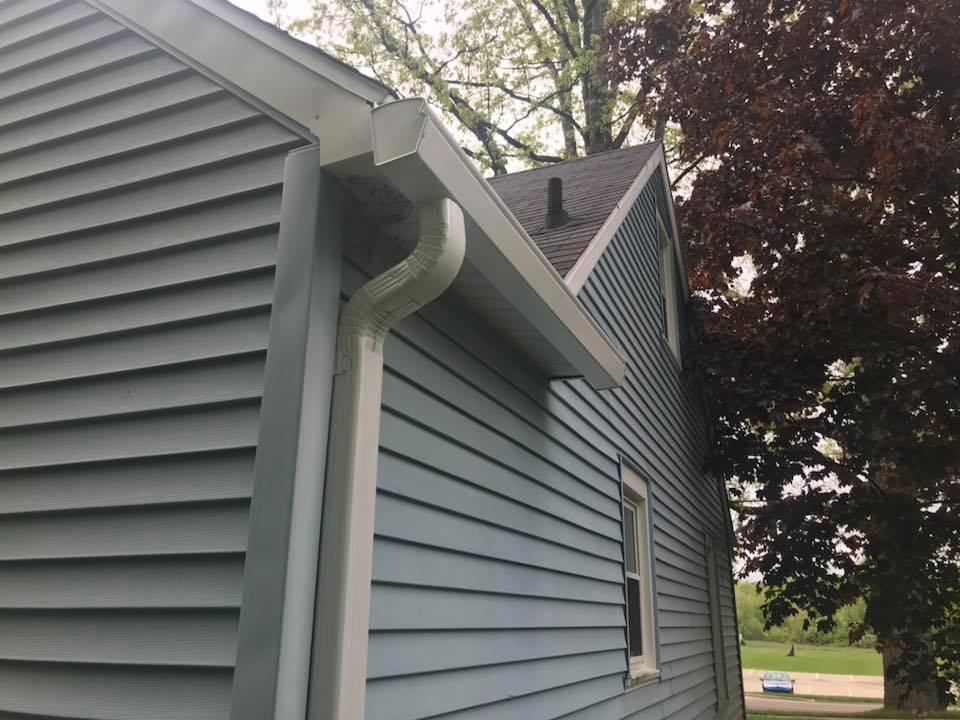
Water Is Pooling Near the Foundation
This is where gutter problems stop being just gutter problems.
A gutter system can successfully collect water from the roof and still fail at its larger job if that water is discharged directly beside the house.
After a rainstorm, look around the foundation.
Do you see standing water?
Does one area remain noticeably wetter than the surrounding ground?
Is a downspout depositing a concentrated stream of roof runoff directly beside the foundation?
The University of Minnesota Extension identifies improperly functioning gutters, downspouts, and grading as common contributors to basement moisture problems. Its guidance recommends evaluating these exterior drainage components early when trying to control water around a foundation.
That is an important reminder that gutters should be evaluated as part of the home's complete drainage system.
The goal is not simply to get water off the roof.
The goal is to move it somewhere appropriate.
Mulch or Soil Is Washing Away Below the Roofline
Landscaping can provide clues about gutter performance.
Look for washed-out mulch, exposed soil, small trenches beneath a gutter, or areas where repeated water impact has disturbed landscaping.
Those patterns often indicate water is repeatedly falling in the same place.
Sometimes that comes from overflow.
Other times it can come from a leaking seam, damaged corner, missing gutter section, or poor drainage configuration.
Homeowners occasionally get used to seeing this because it develops gradually. But if every substantial rainstorm rearranges the mulch beneath one part of your house, there is probably a reason.
The water should be traveling through the gutter system instead.
The Gutters Are Sagging or Pulling Away From the House
A gutter needs the proper slope to move water toward its downspouts.
When sections sag, that pathway changes.
Water can begin collecting in low spots rather than draining completely. Debris settles into that standing water. The added weight can make an already weak gutter system perform even worse.
Look along the gutter line from the ground.
Does it appear straight?
Are any sections visibly lower than others?
Can you see gaps where the gutter is separating from the fascia?
If so, the question may be bigger than whether the gutter needs another cleaning.
Older, damaged, leaking, or poorly supported gutters may be candidates for gutter replacement rather than another temporary repair.
Downspouts Are Dumping Water in the Wrong Place
A downspout can work perfectly and still create a drainage problem.
The question is what happens at the bottom.
If the downspout ends immediately beside the foundation, all of the water collected from a large section of roof can be concentrated into a very small area next to the home.
That is exactly what a well-designed drainage system is supposed to avoid.
The University of Minnesota Extension recommends carrying downspout discharge away from the foundation and notes how much water can come off a residential roof during a significant rainfall.
This is why homeowners should inspect the entire route the water takes.
Every part matters.
A Clean Gutter Can Still Be a Bad Drainage System
This is one of the most important things homeowners should understand.
A gutter does not automatically work well just because there are no leaves inside it.
A perfectly clean gutter can still be:
Problems Cleaning Alone Cannot Fix
- Improperly pitched
- Too small for the roof area
- Sagging
- Leaking
- Poorly supported
- Connected to an inadequate downspout
- Discharging water too close to the house
Cleaning solves debris.
It does not automatically correct the gutter system.
That distinction becomes especially important for homeowners who repeatedly experience overflow or drainage problems even after the gutters have been cleaned.
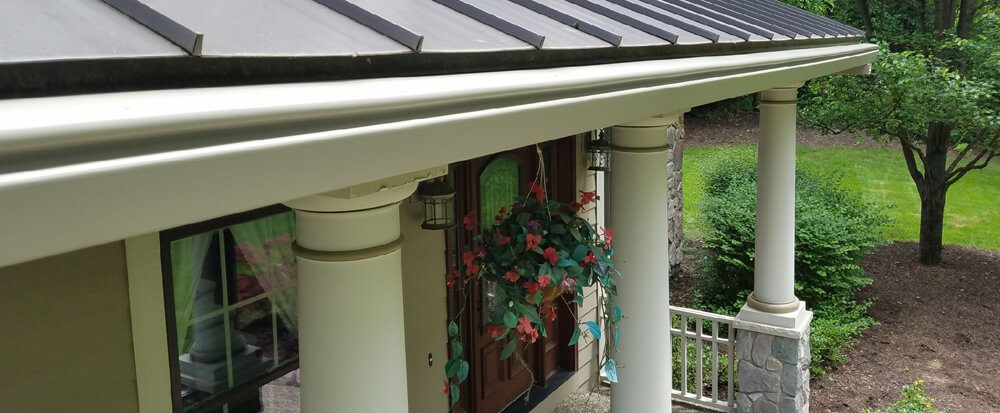
Why K-Guard Is About Water Management, Not Just Leaves
The K-Guard® Leaf Free Gutter System is often associated with eliminating clogged gutters, and for good reason.
But preventing debris from filling the gutter is only part of the design.
K-Guard is a complete gutter-and-hood system, not simply a screen or topper installed over an existing gutter.
The system is designed around collecting water, maintaining structural support, keeping debris out, and moving water efficiently away from the roofline.
K-Guard's system includes several important elements.
And because K-Guard replaces the gutter itself, homeowners are not simply placing a new cover over gutters that may already leak, sag, or be nearing the end of their useful life.
Learn more about the complete system on our Why K-Guard® page or see how it compares with other products on our Competitor Comparison page.
Should You Repair the Gutters or Replace Them?
Not every drainage problem requires a new gutter system.
A relatively new gutter with an isolated issue may simply need professional repair or adjustment.
But replacement deserves consideration when several problems appear together.
For example, if your gutters routinely overflow, sag in multiple places, leak, pull away from the home, clog repeatedly, and are already showing their age, continuing to repair individual symptoms may not solve the larger problem.
That is where a complete system becomes worth comparing.
K-Guard combines the gutter and protection system rather than asking an aging gutter to support another add-on product.
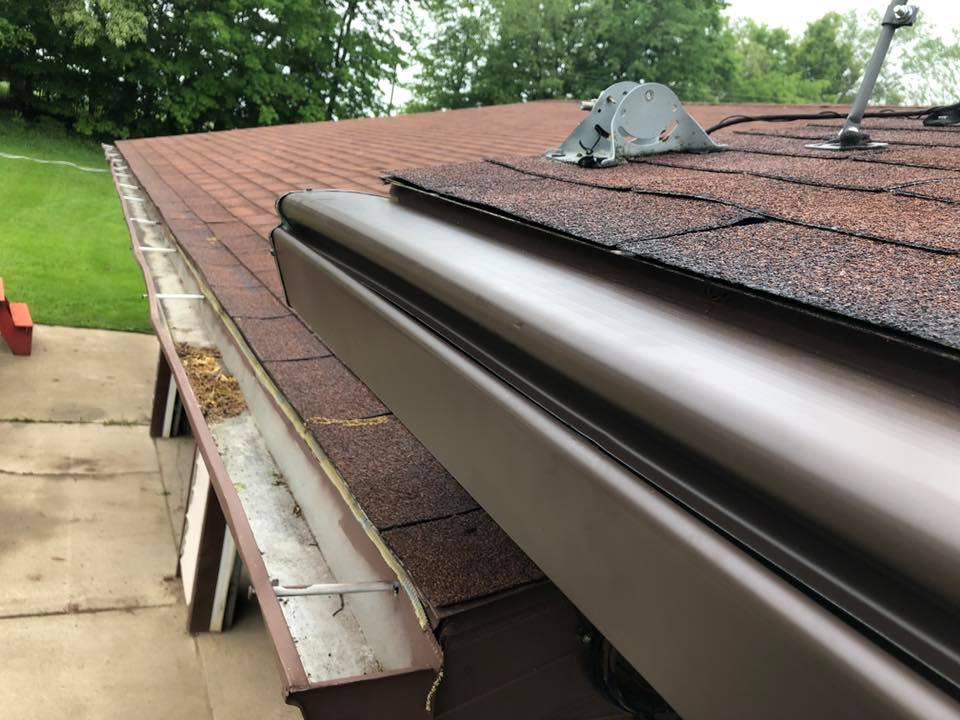
This real installation helps illustrate the difference between an exposed traditional gutter and the finished K-Guard system.
If your existing gutters are already showing signs of failure, learn more about gutter replacement or compare your options on our Gutter Guards page.
November Is a Good Time to Watch Your Gutters Work
You do not need to wait for a basement problem, damaged landscaping, or a major gutter failure to evaluate drainage.
Use the weather.
During the next steady November rain, walk around your home from the ground.
What to Watch During a Rainstorm
A good gutter system should make the path of the water fairly simple to understand: off the roof, through the gutter, down the downspout, and away from the areas of the home you are trying to protect.
If that is not happening, now is a good time to find out why.
Fix the Water Problem Before Winter Hides It
Once winter arrives, drainage problems do not necessarily disappear.
They simply become harder to see and less convenient to address.
A gutter that sags in November will still sag when temperatures fall.
A blocked downspout will not fix itself.
Water that repeatedly collects beside the foundation deserves attention before the ground freezes.
K-Guard of West Michigan helps homeowners evaluate their existing gutter systems and determine whether repair, replacement, or a complete leaf-free gutter system makes the most sense.
If you are seeing overflow, slow drainage, standing water, sagging gutters, or water going somewhere it should not, schedule a free, no-obligation estimate.
Do not just ask whether your gutters are clean.
Ask where the water is going.
Is Your Gutter System Moving Water Where It Should?
Schedule a free, no-obligation estimate with K-Guard of West Michigan. We can evaluate your existing gutter system, discuss drainage concerns, and help determine whether repair, replacement, or a complete leaf-free gutter system is the right solution for your home.