
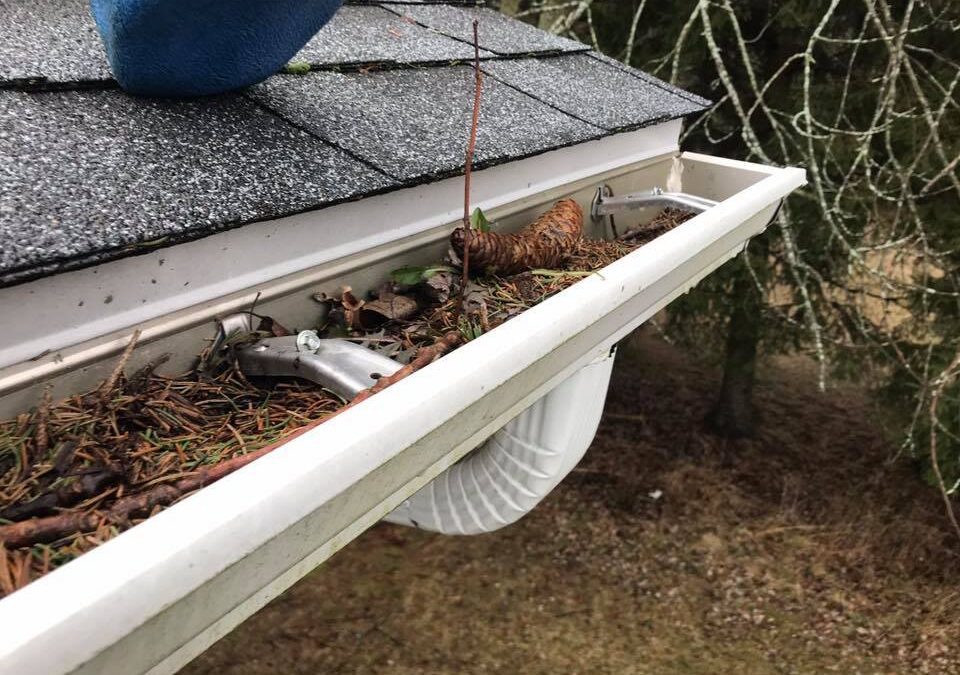
Fall Is Here in West Michigan: Is Your Gutter System Ready?
October weather may still feel comfortable, but leaves are already beginning to fall across West Michigan. Now is when clogged gutters, slow downspouts, and drainage problems can start becoming much easier to see.
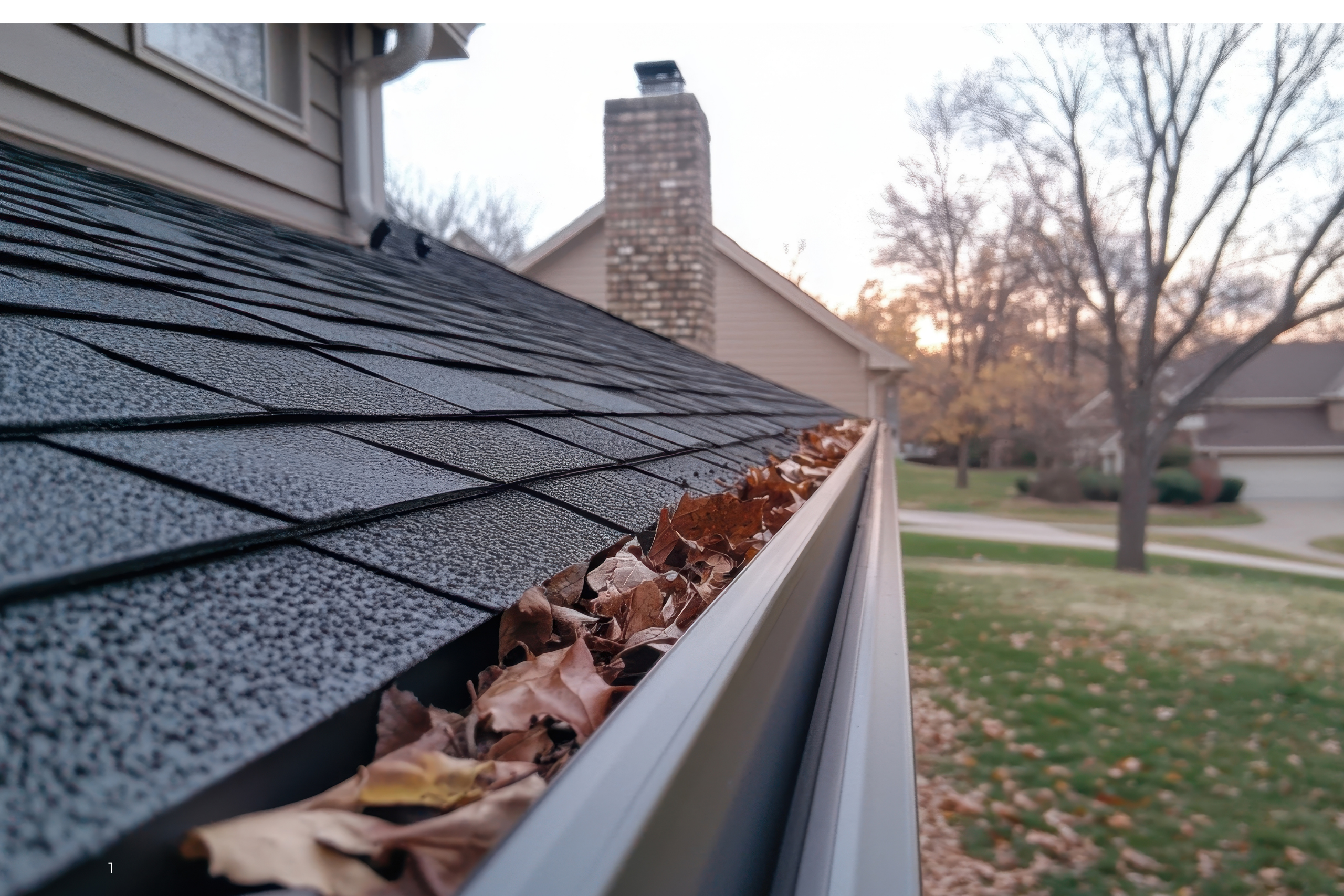
Early October in West Michigan can be deceptive.
The afternoons may still feel warm. The lawn is still green. There may be plenty of good weather left before winter. But look at the trees and you can see the season starting to change. Some leaves are already coming down, and it will not be long before yards, roofs, valleys, and gutters are collecting much more of them.
For homeowners with traditional open gutters, this is when the yearly gutter cycle starts all over again.
Leaves fall onto the roof. Wind pushes them toward the gutter line. Pine needles, sticks, roof grit, and debris mix together. Rain makes everything heavier. Downspout openings become restricted. Before long, water that should be moving away from the home can start spilling over the edge instead.
Fall gutter maintenance is nothing new in Michigan. But repeatedly cleaning the same gutters is not the only option.
The K-Guard® Leaf Free Gutter System takes a different approach by combining the gutter and protective hood into one complete system designed to move rainwater away from the home while helping keep leaves and debris out.
October is the point when a gutter system starts showing how prepared it really is. As more leaves come down and fall rain arrives, existing clogs, drainage problems, weak gutter sections, and undersized systems become much harder to ignore.
October Is When Gutter Problems Start Becoming Obvious
In late summer, gutter problems can be easy to overlook.
A few leaves or pine needles inside an open gutter may not seem important. A partially restricted downspout might still handle a light rain. A small sag or leak may go unnoticed when the weather is dry.
Fall changes that quickly.
As leaves begin dropping, existing debris has something new to collect against. One leaf catches another. Wet organic material settles into the gutter channel. Downspout openings can become restricted, and a gutter that seemed fine in September may suddenly have trouble during an October rain.
Now is a good time to pay attention to what happens around your home when it rains. Watch the gutter line. Look at your landscaping. Check areas near downspouts and the foundation.
If water is spilling over instead of moving through the system, the gutter is telling you there is a problem.
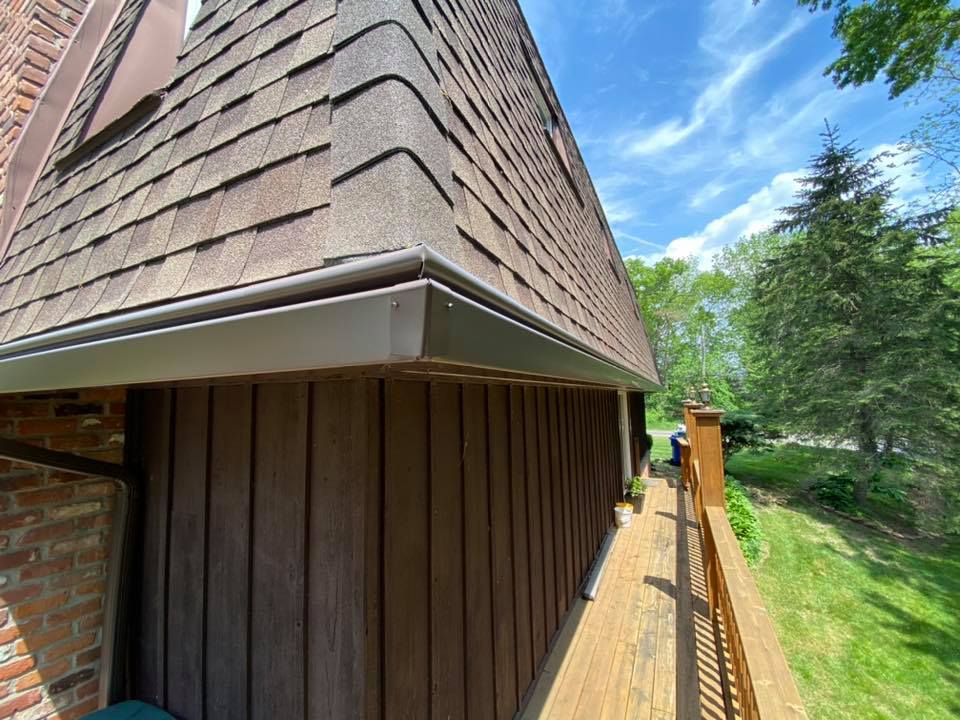
Why Clogged Gutters Are About More Than Leaves
Nobody wants gutters full of wet leaves, but the leaves themselves are not the biggest concern.
The real issue is what happens to the water.
Gutters are part of your home's exterior water-management system. Their job is to collect water from the roof and move it through the gutter and downspout system to an appropriate discharge point away from the home.
When debris interferes with that process, the water still has to go somewhere.
It may pour over the front of the gutter and into landscaping. It may run behind a loose gutter. It may stain siding or fascia. Water discharged too close to the home can also contribute to moisture problems around the foundation.
The University of Minnesota Extension identifies defective or missing gutters and downspouts as a common contributor to basement moisture problems and recommends evaluating gutters, downspouts, and surface grading when controlling water around a home.
That is why good gutter protection is really about water management, not simply keeping the gutter channel looking clean.
Traditional Open Gutters Have One Basic Problem
Traditional gutters can move water effectively when they are properly sized, installed, and clear.
The challenge is that the top is open.
Whatever reaches the roof can potentially reach the gutter.
One gutter cleaning solves the immediate buildup. It does not change the design of the gutter.
More leaves can arrive tomorrow.
For some homeowners, cleaning once or twice a year is acceptable. For others, especially homes surrounded by mature trees, the cycle becomes a recurring frustration.
That is where a professionally designed gutter protection system can make sense.
But gutter guards are not all built the same way.
K-Guard Is a Complete Gutter System, Not Just a Cover
One of the most important differences homeowners should understand about K-Guard is that it is not simply a screen or topper installed over an old gutter.
K-Guard is an integrated gutter and hood system.
The gutter, hood, hangers, drainage design, and downspouts work together as one system. That is especially relevant when replacing gutters that already leak, sag, clog repeatedly, or simply are not performing well.
Instead of putting a new cover over an aging gutter, K-Guard gives the home a new gutter and leaf-free hood together.
Homeowners evaluating different products can see how the complete system compares on our K-Guard competitor comparison.
The Hood Helps Keep Fall Debris Out
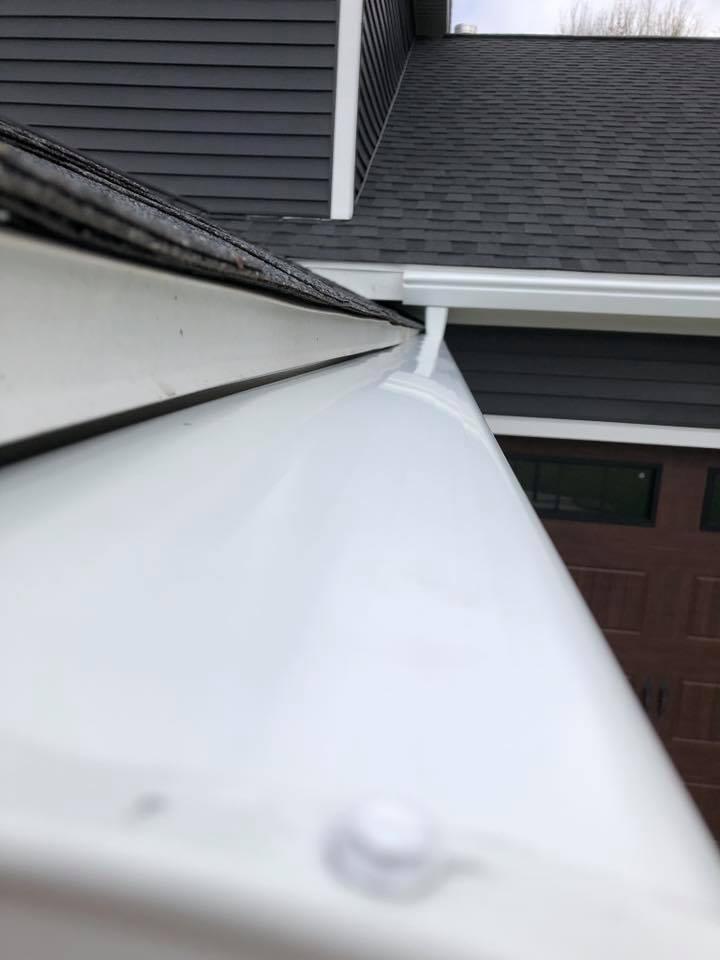
The curved hood is designed to guide water into the gutter while helping leaves and debris continue past the opening rather than collecting inside the gutter channel.
That becomes particularly valuable during fall when thousands of leaves can move across a roof over a relatively short period.
The goal is not to make leaves disappear. It is to help keep them from becoming a clog inside the gutter.
Patented Hangers Support the System
The K-Guard system is built around patented high-strength, all-weather polymer hangers positioned every 24 inches. The hangers support the gutter and hood while helping the system maintain its shape and resist sagging.
Structural support becomes increasingly important as West Michigan moves from fall rain into colder weather later in the year.
A Rear Drainage Channel Adds Another Path for Water
K-Guard also incorporates a rear drainage channel into the system, giving water another route into the gutter rather than allowing wind-driven moisture to collect behind the system.
Oversized Downspouts Help Move Water Away
Getting water into the gutter is only half the job.
It also has to leave.
K-Guard accommodates oversized 3-inch by 4-inch downspouts designed to move water efficiently through the system and toward the appropriate drainage area.
Together, the hood, gutter, drainage channel, hangers, and downspouts are what make K-Guard a complete system rather than simply another gutter cover.
Learn more about the system on our Why K-Guard® page.
Fall Is When the Difference Becomes Easier to See
A gutter protection system is easy to talk about when the sky is clear.
Fall is when it has to perform.
Leaves land on the roof. Wind moves debris around. Rain carries smaller material toward the gutter line. Temperatures change quickly.
A traditional open gutter invites that debris directly into the channel.
K-Guard is designed around preventing that cycle in the first place.
That can mean less time wondering whether the downspout is plugged, less concern when leaves begin covering the roof, and less recurring gutter maintenance for the homeowner.
K-Guard of West Michigan backs the system with a Lifetime No-Clog Warranty, adding another level of reassurance for homeowners looking for a long-term gutter solution.
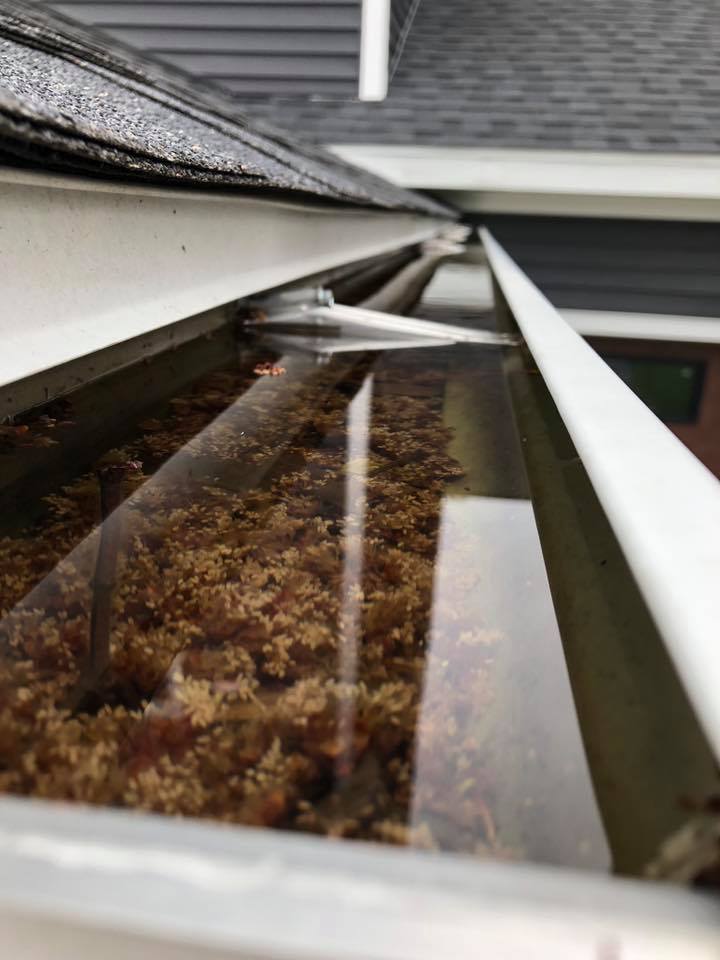
The Ladder Is Another Part of the Fall Gutter Routine
Cleaning gutters often means climbing a ladder, moving it, climbing again, reaching into the gutter, climbing down, and repeating the process around the house.
That is especially inconvenient when the gutter line is high, landscaping makes ladder placement difficult, or the ground is wet.
Ladder use also deserves to be taken seriously.
The U.S. Consumer Product Safety Commission includes gutter cleaning among household activities that require ladder precautions and advises consumers to use solid, level footing, stay clear of power lines, and follow basic ladder-safety practices.
A leaf-free gutter system cannot eliminate every reason you might ever use a ladder around your home, but it can reduce the recurring need to climb one simply because your gutters are full of leaves again.
For many homeowners, that is one of the most practical benefits of moving away from traditional open gutters.
What Should You Look for Around Your Home This October?
You do not have to climb onto the roof to get a basic idea of how your gutter system is performing.
The next time West Michigan gets a steady rain, walk around the property from the ground and pay attention.
October Gutter Warning Signs
- Water overflowing from the gutter edge
- Water dripping behind the gutter
- Washed-out mulch below the roofline
- Pooling water near the foundation
- Very little water leaving a downspout
- Sagging gutter sections
- Gutters pulling away from the fascia
- Staining on siding or fascia
If you see several of these issues, simply removing the leaves may not address the entire problem.
The gutter itself could be undersized, improperly pitched, damaged, poorly supported, or nearing the end of its useful life.
That is when it becomes worthwhile to compare continued repairs and cleanings against a complete gutter replacement.
Already Cleaned Your Gutters This Fall? Ask Yourself One Question
For some homeowners, the gutters have already been cleaned once this season.
The question is: Will you have to do it again before winter?
If your home has heavy tree coverage, the answer may be yes.
One of the frustrations with fall gutter cleaning is timing. Clean too early and more leaves arrive. Wait until every leaf is down and clogged gutters may sit through several fall rain events first.
It becomes a guessing game.
This is one reason homeowners start looking at leaf guards or other gutter protection after years of repeating the same routine.
The decision is not really between clean gutters and dirty gutters.
It is between continuing to maintain an open system that allows debris inside or changing to a system designed to reduce that problem.
October Is Also the Bridge Between Fall and Winter
In West Michigan, fall does not last forever.
The comfortable October weather eventually gives way to colder rain, freezing nights, snow, and ice.
That does not mean a gutter system alone solves every winter roof or ice problem. Proper insulation, ventilation, roofing, drainage, and other parts of the home all play separate roles.
But it does make October a useful time to address a gutter system that is already showing signs of failure.
A sagging gutter in October is unlikely to improve by January.
A blocked downspout will not become more effective when temperatures fall.
A system that repeatedly overflows during autumn rain deserves attention before winter weather makes exterior work less convenient.
This is why K-Guard is designed as more than seasonal leaf protection. It is intended to provide year-round water management through West Michigan's changing weather.
Should You Add a Gutter Guard or Replace the Whole System?
That depends on the condition of the gutters already on the home.
If existing gutters are relatively new, properly sized, structurally sound, and performing well, homeowners may explore different types of add-on protection.
But if the current gutters are leaking, undersized, sagging, pulling away from the home, repeatedly clogging, or already due for replacement, putting another product on top of them may not solve the underlying issue.
This is where K-Guard's complete-system approach is different.
You are not trying to make an old gutter work better with another attachment. The gutter and hood are installed together as a purpose-built system.
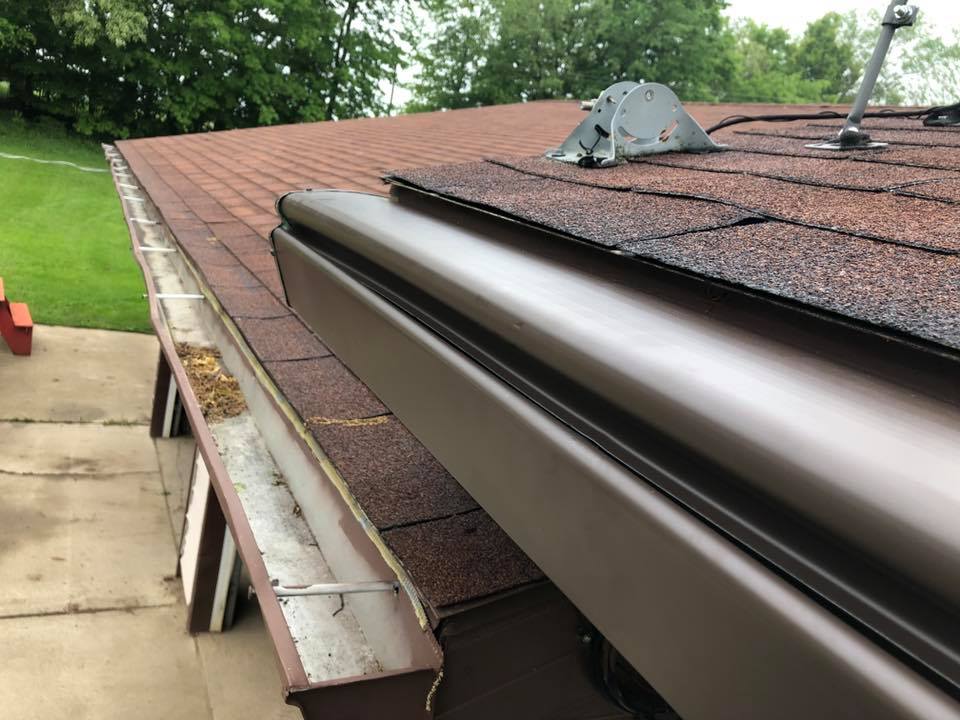
This real installation shows why replacing the gutter itself can make a noticeable difference. K-Guard addresses the gutter and protection system together rather than simply adding another layer over an aging gutter.
Our gutter system comparison provides a closer look at how K-Guard differs from toppers, helmets, covers, and other approaches.
What Homeowners Are Really Buying With K-Guard
The product itself matters, but most homeowners are not excited about purchasing gutters.
They want the problems associated with gutters to stop.
They want rainwater moving where it belongs.
They want fewer clogs.
They want fewer trips up a ladder.
They want landscaping that is not being washed out by overflow.
They want a system that looks clean along the roofline.
And when fall arrives, they want to be able to watch leaves come down without immediately thinking about what might be accumulating inside the gutters.
That is the bigger purpose behind the K-Guard® Leaf Free Gutter System.
It combines a seamless gutter, protective hood, structural support, drainage features, and oversized downspouts into one professionally installed system designed for long-term home protection and lower maintenance.
Do Not Wait for an Overflow to Tell You Something Is Wrong
Early October is a great time to be outside in West Michigan.
The weather can still be comfortable, the trees are beginning to change, and there is still time to address exterior projects before colder weather arrives.
But leaf season is no longer something that is coming months from now.
It has started.
If your gutters clog every fall, have already needed cleaning, overflow during rain, sag, leak, or simply require more attention than you want to give them, this is a good time to find out what your options are.
K-Guard of West Michigan can inspect your existing gutter system, look at how water is moving around your home, and explain whether repair, replacement, or a complete leaf-free gutter system makes the most sense.
There is no reason to wait until the gutters are overflowing with wet leaves.
Find Out If Your Gutters Are Ready for the Season
Schedule a free, no-obligation estimate with K-Guard of West Michigan. We can inspect your current gutter system, explain your options, and help you determine the right solution for your home.